
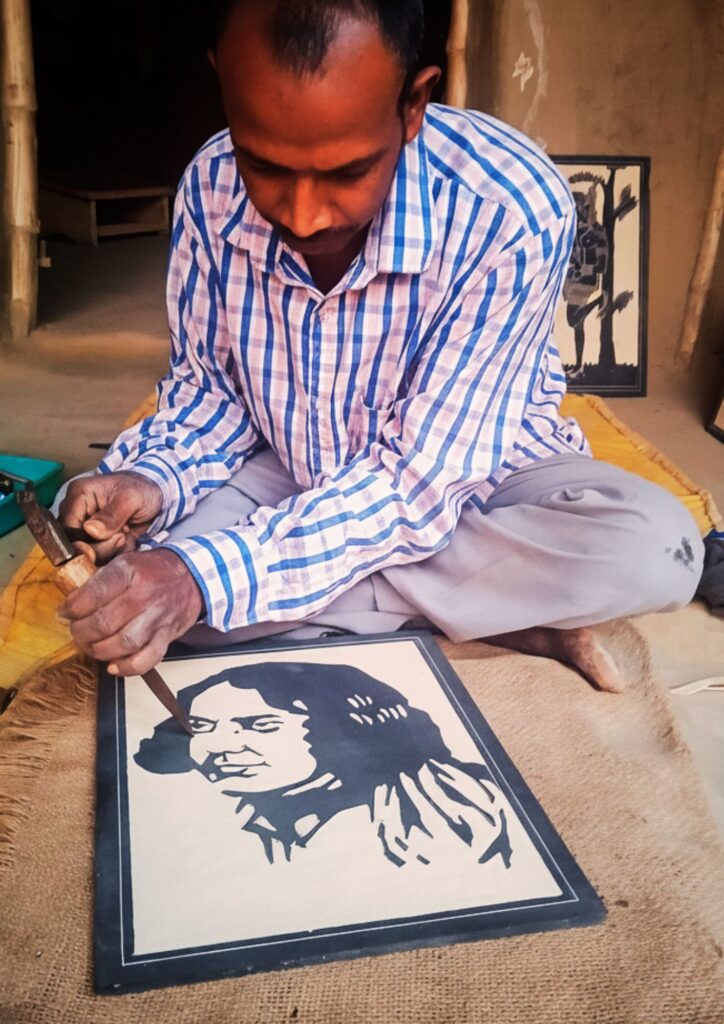
Meet Bishwa: carving light into ceramic, carrying fields in his heart, and placing West Bengal’s village artistry on the global map through Tribal Veda Heritage.
Roots and resolve
Bishwa is a smallholder farmer from rural West Bengal whose hands move seamlessly between soil and stoneware, tending crops by day and chiseling images onto ceramic tiles in the quiet hours of dusk.
This dual life mirrors a timeless Bengal ethos where agrarian rhythm and craft tradition breathe together across seasons and festivals.
At Tribal Veda Heritage, the mission is to surface makers like Bishwa and stitch reliable, year‑round work pipelines so that craft is not a side note to farming but a dignified second income with 12 months of orders.
What technique does he use?
What Bishwa does on tiles aligns with etched or engraved marking on ceramics, where designs are incised or the surface is microscopically altered to create permanent imagery and contrast.
In practice, ceramic decoration spans two close techniques: etching modifies the top surface using chemistry or energy to create shallow, detailed marks, while engraving physically cuts grooves that are deeper and tactile.
Modern workshops also classify tile imagery done with tools or lasers as “etching” when the glaze is transformed rather than gouged, reserving “engraving” for material removal—an important nuance when describing a process on glazed tiles.
Hand tools, humble studio
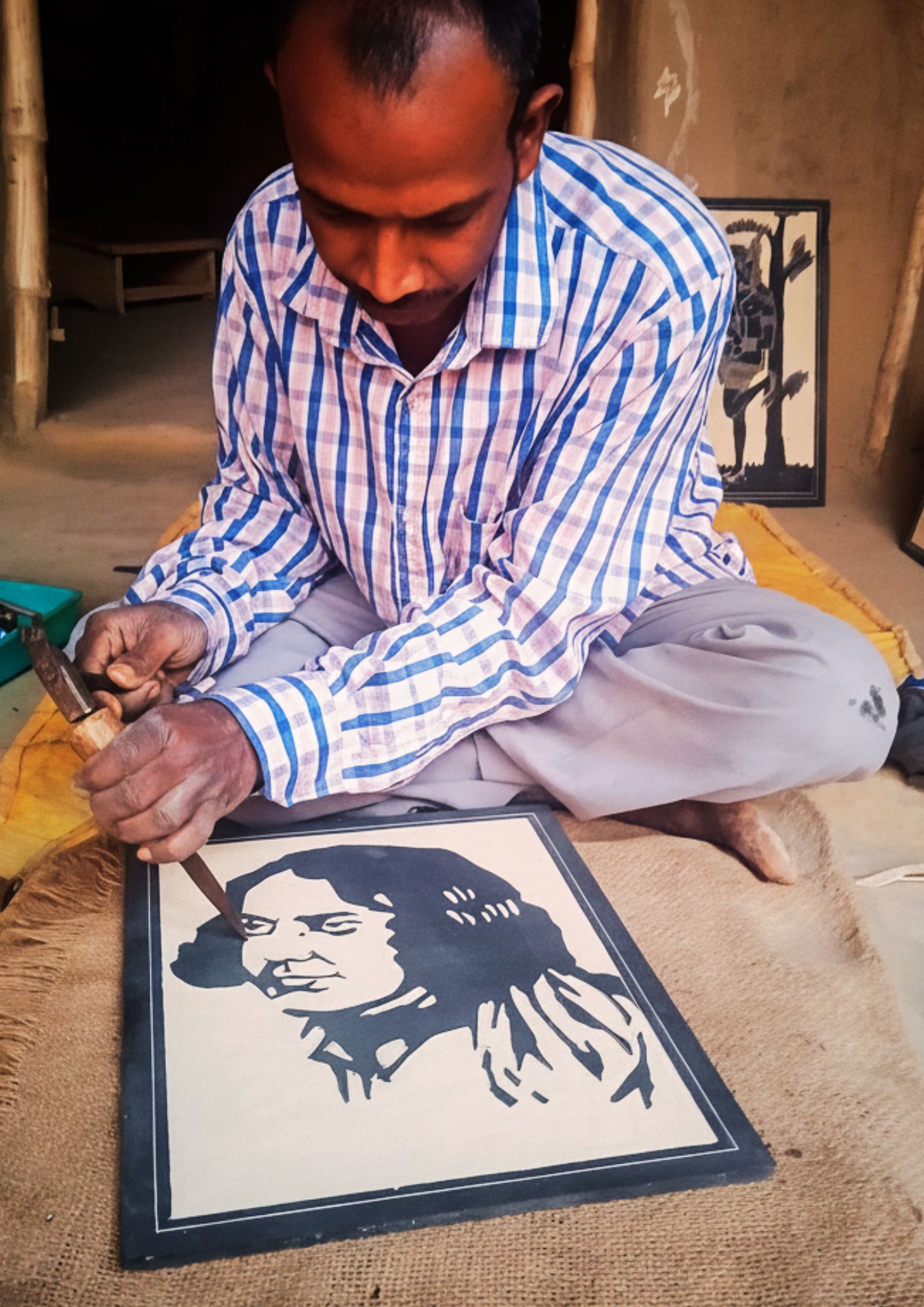
Judging from Bishwa’s toolkit and posture on the floor mat, the workflow is a hand‑guided, low‑tech route: secure tile, outline high‑contrast forms, then incise or abrade the glaze layer with small chisels and scrapers to reveal dark‑light silhouettes that read clearly at a distance.
This approach echoes broader Bengal craft methods where artisans “etch” motifs into clay and related surfaces with simple tools before finishing, privileging steady hands over machines and producing unique, one‑of‑one pieces.
Because the marks are cut or abraded, the resulting image is durable and resists casual wear, a hallmark of engraved or etched ceramic surfaces used for signage and keepsakes.
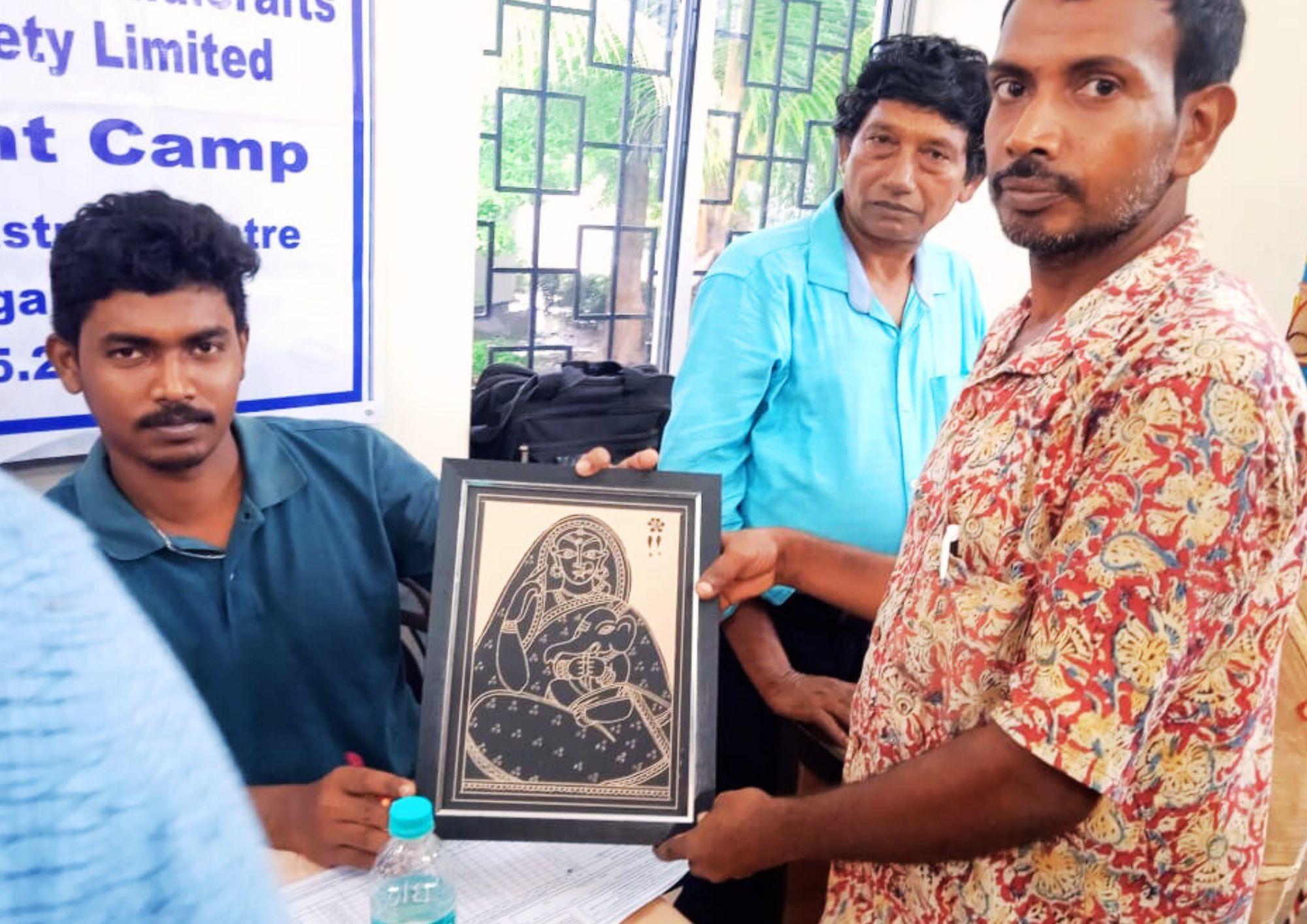
Etching 101: a simple explainer
- Etching changes the top layer of a hard surface to create contrast; engraving removes material to create visible grooves, and both can be used artistically on ceramics depending on depth and finish desired.
- On glazed tiles, artists often prefer shallow etching or controlled abrasion that preserves waterproofing while producing crisp silhouettes and lines for portraits and deity icons.
- Studios may also use stencils or transfer outlines, then cut by hand with rotary bits or burins; in industrial settings, lasers or chemical masks create consistent editions, but hand‑worked tiles like Bishwa’s remain singular and expressive.
Why tiles, why now?
Ceramic tiles are affordable, archival, and culturally resonant in eastern India where terracotta and fired surfaces have long carried mythic and everyday narratives, making them ideal canvases for rural makers entering formal markets.
They accept fine line work and withstand humidity, so a portrait, goddess icon, or village scene etched today can live on as wall art, altar decor, or institutional gifts without fading quickly.
With ethical sourcing and direct‑to‑collector storytelling, tiles become income bridges between crop cycles, smoothing the financial volatility many artisan‑farmers face each year.
Tribal Veda’s 12‑month work plan
- Aggregated orders: organize quarterly design capsules—portraits, folk deities, and heritage scenes—so Bishwa and peers can maintain steady monthly volumes rather than sporadic festival spikes.
- Skill deepening: share technique notes on surface prep, contrast mapping, and safe finishing so hand‑etched tiles meet repeatable quality specs for export and institutional buyers.
- Market linkage: pair artisan profiles with craft education content explaining etching vs engraving to increase buyer confidence and average order value for bespoke commissions.
A day in Bishwa’s studio
Morning belongs to the fields, but late afternoon light is for drawing—charcoal outlines on primed tile, composition centered for clean borders and mounting later.
Evening is the slow work: the tip of a burin or scraper rides the glaze, lifting small flecks to shape hair, drape, and eyes, each stroke tested against shadow for high‑contrast reading under room light.
Before dawn, finished tiles cure and are cleaned; the matte‑gloss interplay of cut and intact glaze gives portraits their quiet strength on walls and altars alike.
Caring for an etched tile
Keep tiles dry‑wiped and away from abrasive scouring; mount with wall hooks or frames, and avoid chemical cleaners that could haze the glaze’s optical contrast over years.
In kitchen or entry settings, choose frames or backers to minimize edge knocks, ensuring the etched image stays crisp even with frequent dusting.
For gifting or shipping, add corner protectors and shock‑absorbing wraps, treating the tile like framed art rather than floorware to preserve surface detail.
Commission Bishwa
Custom portraits, heritage icons, institutional mementos, and event awards can be commissioned in standard sizes for reliable framing and worldwide shipping through Tribal Veda Heritage.
Briefs can include a photo reference or motif list, preferred border, inscription on the backer, and delivery date; proofs are shared before final cutting to ensure likeness and legibility.
Bulk runs for schools, cultural centers, and sponsors help sustain 12‑month livelihoods—every commissioned tile is a direct hour in an artisan’s calendar.
Why this matters
When buyers learn the difference between etching and engraving, they understand the time, discipline, and permanence in every handmade tile and are more willing to pay fair value for the labor and lineage inside each piece.
For Bishwa, predictable orders mean tools replaced on time, seeds bought on schedule, and the freedom to train a nephew or neighbor at the mat next to him, multiplying skill across the village.
For Bengal’s craft map, each signed tile is a pin on the world stage—proof that rural studios can meet global quality without losing their soul.
Call to action
Commission a portrait, sponsor a limited series, or stock tiles at your gallery—help convert one artisan’s passion into a 12‑month livelihood, one etched story at a time.
To begin a commission or a wholesale inquiry, share your design idea and size, and a production schedule will be mapped with Bishwa’s studio for timely delivery and documentation.
Every order funds training, tools, and stable calendars for artisan‑farmers building futures in West Bengal’s villages through craft and care.
Explore available works and place your order online: tribalvedaheritage.com/product-category/memory-weave-eco-photo-frames/; for custom portraits, contact hello@tribalvedaheritage.com.